

Why a Handmade Children’s Wardrobe Can Last Beyond the Toddler Years
A handmade children’s wardrobe can remain useful well beyond the toddler years when it is built with durable materials, practical storage and dimensions that suit growing children. Consider internal hanging space, adjustable storage, sturdy construction and timeless designs that adapt to changing needs and bedroom styles. Bespoke sizing, quality fittings and proper care can extend its lifespan, making it a long-term investment that continues to provide organised storage as your child grows.
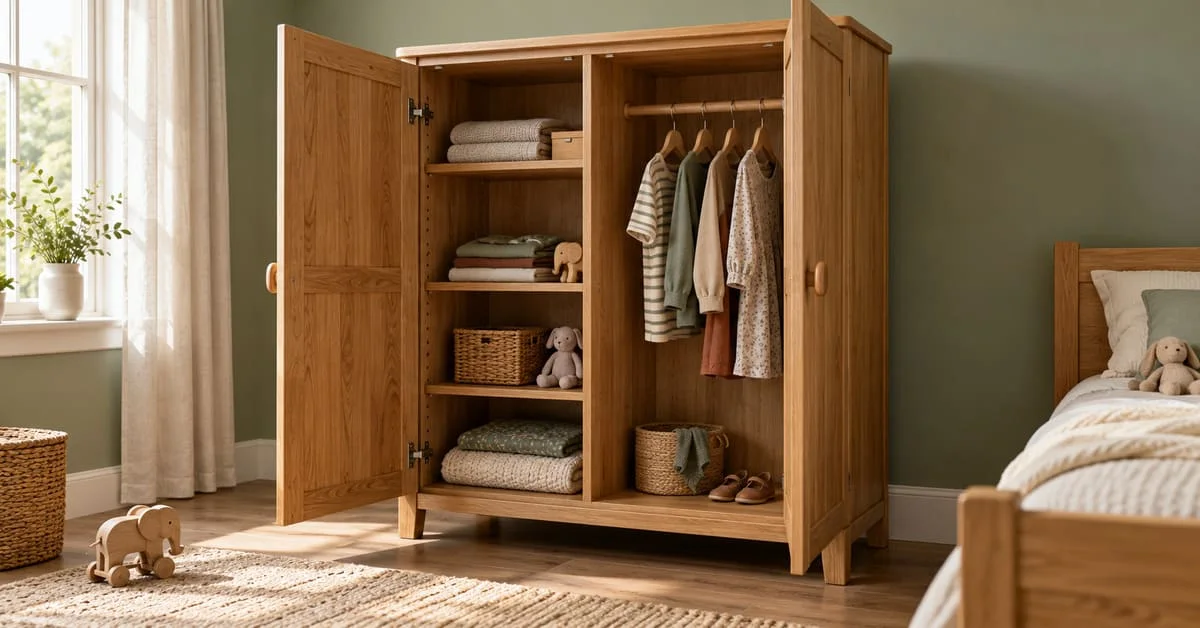
A handmade children’s wardrobe can remain useful long after the toddler years when its construction withstands everyday use, its storage accommodates bigger clothes, and its appearance suits an older child’s bedroom. Those qualities give families good reasons to keep it as their needs change.
The important word is “can”. Handmade furniture still needs the right dimensions, suitable fittings and sensible care. Choosing with school uniforms and growing independence in mind helps you avoid a wardrobe that feels outgrown while it is still in good condition.
Construction that supports years of everyday use
Wardrobe doors and drawers are used repeatedly, so look beyond the painted finish. Ask how the drawers are built, how the rails are supported and what materials are used in the main cabinet, back and drawer bases. “Handmade” describes production; the construction details tell you more about the individual piece.
For example, the Kiddies Apple Green two-door, two-drawer wardrobe lists tongue and groove drawers, with choices of traditional or metal runners and hanging rails. These are specific details you can discuss with the maker when deciding how the wardrobe will be used.
Care also affects how long those parts remain serviceable. Follow the supplied cleaning instructions, wipe spills promptly and avoid abrasive cleaners or direct heat. Investigate a sticking drawer or loose handle early, and ask whether the affected fitting can be adjusted or replaced. A localised problem need not automatically mean replacing the whole wardrobe.
Enough room for clothes that grow with your child
Toddler outfits take up little hanging space. Later, school shirts, jackets and longer dresses make the internal layout more important. A wardrobe can remain perfectly sound yet become inconvenient because there is too little clearance below the rail.
Check usable hanging height, internal depth and rail width before ordering. External measurements alone cannot tell you whether larger hangers will fit comfortably with the doors closed. Ask for internal measurements and compare them with clothing you expect to store over the next few years.
Where the bedroom allows, the Kiddies Sky Blue eight-drawer wardrobe offers a larger format, measuring approximately 200 cm high, 120 cm wide and 52 cm deep. Its eight drawers provide scope for separating different clothing categories.
Balance that capacity against the room itself. Leave space for doors and drawers to open fully, and consider where a larger bed or homework desk might eventually go.
Mixed storage can take on different jobs
A useful wardrobe accommodates changing routines. Drawers initially used for vests and spare toddler clothes can later hold underwear, PE kit or folded T-shirts. Shelves can take knitwear and organisers, leaving hanging space available for clothes that benefit from it.
The Kiddies Ivory three-drawer wardrobe with shelves and a top box combines these storage types and measures approximately 226 cm high, 80 cm wide and 52 cm deep. That taller arrangement may suit a room where floor space is limited, provided ceiling height and access allow it.
Keep everyday clothing within an appropriate reach and reserve upper storage for adult access. Secure the wardrobe using suitable anti-tip fixings in line with installation guidance. Check whether shelves or rails are adjustable before planning changes; customisation when ordering does not necessarily mean later adjustment is possible.
A simple design can survive changing tastes
A wardrobe is easier to keep when it still looks at home after the nursery décor disappears. Plain doors and an uncomplicated shape leave room for personality to come from bedding, artwork and accessories, which are easier to change as interests develop.
The Kiddies White wardrobe with plain doors is one example. Its product options include several colours, different knobs and handles, and optional soft-close hinges and runners. This gives you choices over its appearance and fittings at the outset.
White or ivory can work across several decorating schemes, but a favourite colour need not shorten a wardrobe’s useful life. Consider whether you would still enjoy that colour alongside more grown-up furnishings. If repainting becomes appealing later, ask the maker about suitable preparation and finishes first.
Bespoke sizing can prevent an early replacement
Sometimes the reason furniture gets replaced is an awkward fit. A wardrobe that blocks a doorway or leaves too little room beside the bed can become harder to live with as the bedroom gains other furniture.
Woodlands Furniture’s handmade bespoke furniture service invites customers to submit measurements and a preferred style for a quotation. That creates an opportunity to discuss future clothing storage alongside the available space.
Measure skirting boards, door clearance and the delivery route as well as the intended position. Describe what you need to store, rather than requesting a narrower cabinet without considering its contents. Agree the proposed internal layout, overall dimensions and assembly arrangements before ordering.
Continued use gives the purchase lasting value
A wardrobe earns its value through the years it remains useful. When it can accommodate the next stage of childhood, you avoid another purchase, another delivery and the work of clearing out the old piece. Compare the complete specification and likely usefulness alongside the initial price.
Its role may also change within the family. A smaller wardrobe could move to a younger sibling’s room or provide extra clothing storage elsewhere, if its condition and dimensions suit. Before moving it, empty it and follow the maker’s handling instructions. Check joints, fittings and stability afterwards, then secure it appropriately in its new position.
Frequently asked questions
How long should a handmade children’s wardrobe last?
There is no universal lifespan. Construction, use, care and storage capacity all matter. A well-chosen wardrobe can serve beyond toddlerhood, but a specific number of years should not be assumed.
Can a children’s wardrobe accommodate teenage clothes?
Some can. Check internal hanging height and depth against longer garments and larger hangers. Drawer capacity matters too, particularly if the wardrobe will be the room’s main clothing storage.
Is solid wood guaranteed in a handmade wardrobe?
No. Handmade does not specify the material. Ask what the main cabinet, doors, back and drawer bases are made from, and confirm the specification for your chosen model.
Can handles be changed as a child gets older?
Often, provided replacement handles suit the existing holes, door thickness and fixings. Check compatibility with the maker before buying replacements or drilling new holes.