

Planning a Children’s Bedroom That Still Works as They Grow
Planning a children’s bedroom with the future in mind helps create a space that adapts as your child grows. Choose furniture with practical storage, flexible layouts and room for changing needs, from play areas to study spaces. Measure carefully, plan for larger beds and clothes, and leave space for future additions like a desk. Timeless finishes, organised storage and regular updates keep the room functional, comfortable and easy to adapt without needing a complete redesign.
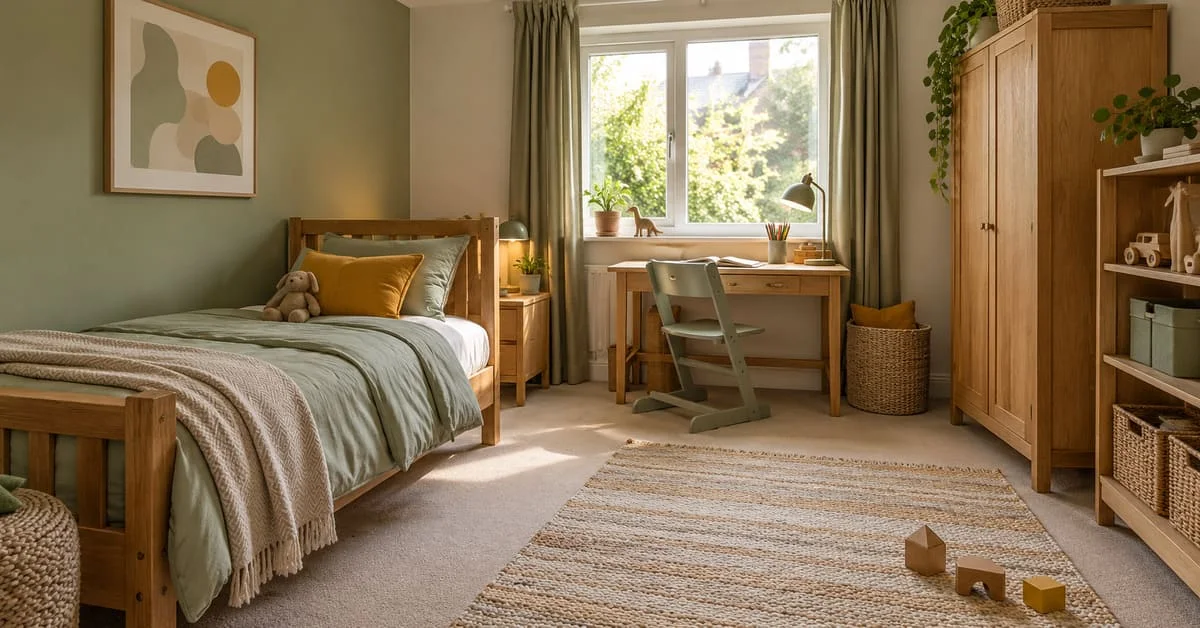
A children’s bedroom needs room to change: floor space for play today, somewhere for homework later, and storage that can cope with bigger clothes and different interests. Start with furniture that fits the room, then make the things your child is most likely to outgrow easy to replace. These decisions will help you avoid a complete redesign whenever their needs change.
Plan the room around its next stage
Measure the bedroom before choosing furniture. Mark doors, windows, radiators, sockets and sloping ceilings on a simple plan. Include the space needed to open wardrobe doors, pull out drawers and move a chair away from a desk.
Then sketch two arrangements: one for your child now and another for their next likely stage. Could the play corner become a study area? Would a longer bed leave a clear route to the door? Is there somewhere for a school bag that will not block the walkway?
Try marking furniture footprints with masking tape. Walk through the room and test the clearances. In a small bedroom, keeping one useful stretch of wall available can be more valuable than filling every gap with storage.
Choose a bed for comfort and suitability
Consider both your child’s current needs and the bed’s likely useful life. Check the manufacturer’s age guidance, mattress requirements and overall frame dimensions; the mattress size alone will not tell you how much floor space the bed occupies.
A straightforward bed frame gives you more freedom to change the surrounding furniture. Underbed storage can be useful, but allow enough space to pull it out without moving other pieces.
If you are considering bunk beds, children under six should not use the top bunk. For older children, check ladder access and overhead clearance as well as the manufacturer’s instructions.
Check whether storage will suit bigger clothes
A wardrobe can fit the room perfectly while offering too little space for clothes a few years later. Look beyond its external dimensions and check usable hanging height, internal depth and the balance between hanging and folded storage.
For example, the Kiddies 2 Door 2 Drawer Wardrobe in White with Plain Doors is listed at 152 cm high, 80 cm wide and 52 cm deep. Its compact size and two drawers make it worth considering where floor space is limited. Ask about the internal hanging clearance before deciding whether it will accommodate longer clothes later.
If an alcove or awkward corner makes standard sizes difficult, discuss dimensions with Woodlands before ordering; this product page offers a bespoke service. Confirm the internal arrangement too, rather than assuming a change in overall size will provide the storage you need.
Give drawers and shelves more than one job
Choose storage by what it can hold over time. A drawer used for spare bedding can later hold sportswear; a shelf for picture books can become space for school folders. Check shelf depth and clearance against the items you expect to store.
The Kiddies 4 Drawer Chest in White measures 81 cm high, 70 cm wide and 40 cm deep. Four drawers let you separate clothing categories, and removable dividers can help organise smaller items without permanently changing the furniture.
Keep everyday belongings within comfortable reach. Use a few clearly labelled containers for toys and keep some shelves open for favourite possessions. As interests change, reassign the containers before buying another storage unit.
Put changing interests into easy updates
Let your child choose the parts of the room they will enjoy seeing every day: bedding, artwork, a rug or a display of favourite things. These are easier to change than a wardrobe or an entire wall treatment.
For larger furniture, choose a finish that works with several possible colour schemes. White and ivory offer flexibility, but a favourite blue or green can work equally well if you would be happy to keep it as other details change.
Check finish samples in the bedroom’s daylight and evening lighting. Before repainting furniture later, ask about suitable preparation and coatings for its existing finish.
Leave space for a proper study area
You may not need a desk immediately, but deciding where one could go prevents an expensive reshuffle later. Allow for a usable work surface, legroom, a chair and nearby book storage.
When homework becomes part of the routine, check the fit with your child sitting at the desk. Their feet should be supported, with a comfortable reach to the work surface. Reassess the arrangement as they grow.
Provide task lighting for reading and writing, alongside general room lighting and a softer bedside light. Plan access to sockets so leads do not trail across the floor, and check for glare where a screen might eventually sit.
Make safety part of every rearrangement
Secure wardrobes, chests and bookcases against tipping using suitable fixings and the manufacturer’s instructions. Heavy furniture still needs proper installation; its weight is no guarantee that it cannot tip.
Keep climbable furniture away from windows. Secure blind cords out of reach using the appropriate safety fittings, and avoid accessible loops.
Whenever you move furniture, check the fixings, walking routes and access to windows again. A layout that worked before a desk or larger bed arrived may need adjusting. Storage should help children reach their belongings without encouraging them to climb drawers or shelves.
Buy coordinated furniture with a clear purpose
A matching set can simplify decisions, provided every piece earns its space. The Kiddies 3 Piece Bedroom Set in White includes a wardrobe, chest of drawers and bedside cabinet. Budget separately for the bed and mattress. The product description also states that the wardrobe arrives partially assembled in two sections, so check delivery access and assembly arrangements.
Prioritise the furniture needed now and leave later purchases until their purpose is clear. This gives you room to respond to your child’s actual routines.
Frequently asked questions
Can a small bedroom work into the teenage years?
Yes, if the layout accommodates an appropriately sized bed, usable storage and somewhere to study. Prioritise clear access when deciding which additional pieces will fit.
Is a matching bedroom set essential?
No. Separate pieces can work together through shared colours or simple shapes. Choose a set when its individual sizes and functions suit the room.
Should I buy an adult-sized wardrobe straight away?
Only if it fits comfortably and everyday items remain accessible. Compare usable storage with the floor space it takes up before choosing a larger unit.
What should change first when storage feels cramped?
Remove outgrown clothes and unused belongings, then reorganise what remains. This shows whether you need more capacity or simply a different arrangement.