

How to Style a Display Unit Without Making It Look Overcrowded
Styling a display unit starts with selecting the pieces you value most and arranging them in balanced groups with visible space between each display. Position larger items first, vary heights and textures, and use colour to create a cohesive look without overcrowding the shelves. Keep everyday storage separate, leave some compartments empty and step back to review the overall arrangement from across the room. A thoughtful approach creates a display that feels organised, practical and visually appealing while highlighting your favourite objects.
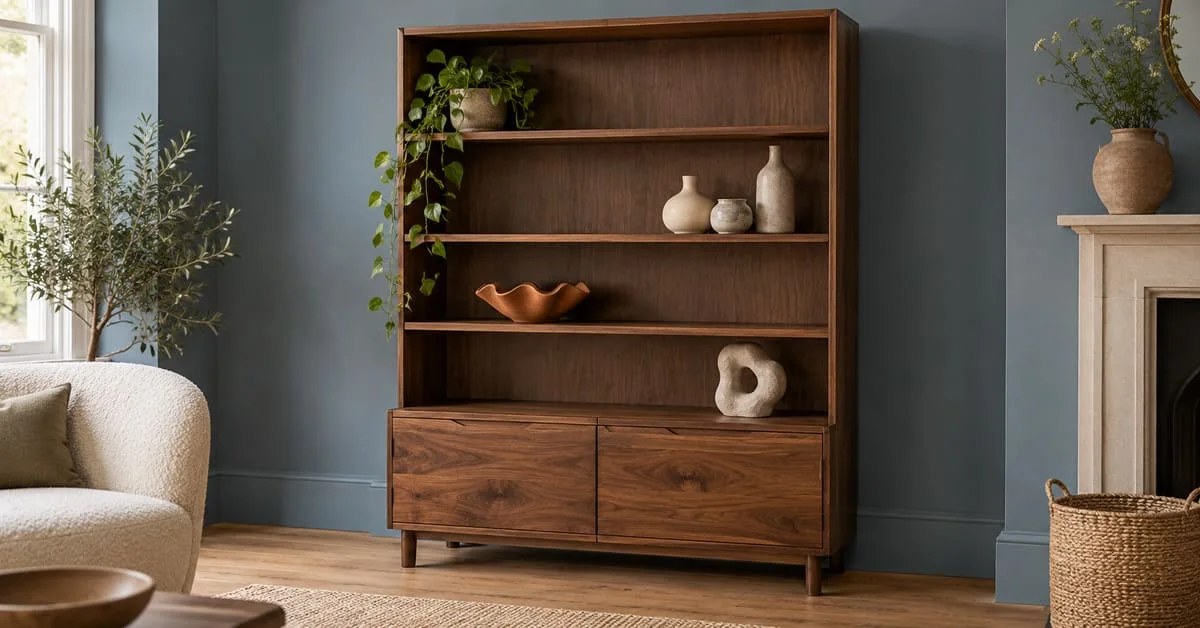
Start with the pieces you most want to see arrange them in distinct groups and leave clear space around them. An uncluttered display should make your favourite objects easier to appreciate while keeping everyday items within reach. You can achieve that with books, family photographs and collected ceramics; you do not need a matching set of accessories or completely empty shelves.
Start with a clear shelf and a shortlist
Remove everything before rearranging. Working around what is already there makes it tempting to squeeze new pieces into the remaining gaps, even when the overall arrangement needs changing.
Set aside the objects you particularly enjoy, then identify anything the unit needs to store. Give stray paperwork, spare cables and unrelated household bits a proper home. Keep sentimental pieces you cannot comfortably display in a separate box for rotation.
Choose a focal piece first: perhaps a framed photograph, a favourite jug or an unusual bowl. Deciding what deserves attention makes it easier to judge which supporting pieces belong beside it.
Leave gaps that you can actually see
A tiny sliver between every ornament will still leave a shelf looking full. Bring related objects together, then leave a more generous break before the next group. Allow space above tall items too, so they do not appear wedged beneath the shelf overhead.
Look for visible stretches of the shelf surface and its background. These gaps help separate the things on display, particularly when several pieces have detailed patterns or irregular shapes.
Avoid applying a fixed percentage of empty space to every unit. A broad shelf can accommodate two separate arrangements; a small compartment may need only one object. Judge the available space against the size and shape of your belongings.
Place larger pieces before small accessories
Position substantial objects first, then assess what the shelves still need. A broad bowl can occupy a lower shelf comfortably, while a taller, lighter ornament might suit a middle shelf with sufficient clearance. Keep heavy objects on lower shelves and follow the unit's load limits and fixing instructions.
Avoid concentrating every dark, bulky or brightly coloured piece on one side. Spread them across different levels so one corner does not dominate. This does not require matching pairs: a short row of books can visually balance a vase elsewhere.
The oak-finish Quebec Shelving Unit has an asymmetrical design. Let its differing spaces guide the placement of taller and wider pieces, and keep selected areas lightly styled so the outline remains visible.
Create small groups with varied heights
Try combining a tall piece with something lower and broader. A photograph beside a small dish creates a clearer arrangement than several similar-sized ornaments spaced evenly along the shelf. Three items can work well, but two may be plenty when space is limited.
Use the shelf depth carefully. Place a securely supported frame towards the back and a low object slightly forward, keeping the photograph visible. Avoid adding another row that conceals what you have just arranged.
Books offer another way to change height. Mix upright books with a short horizontal stack, keeping titles readable. Only place an ornament on books you seldom need; removing it every time you want to read soon becomes irritating.
Connect different objects through colour and texture
Choose a few colours already present in the room and repeat them loosely across the unit. A blue detail in a print might connect with a ceramic bowl on another shelf. Similar frame finishes can bring unrelated family photographs together.
Include the furniture finish in your decisions. On a dark unit, pale objects can create separation; against a light background, richer colours may stand out more clearly.
Keep some variation in texture, such as matt pottery beside smooth glass. If every item is patterned, reflective or strongly coloured, try replacing one with a simpler piece before adding anything else.
Work with the shape of your display unit
Narrow corner shelves need compact arrangements that sit fully within their edges. The Tiva Corner Ladder Shelving Black has four shelves and a matt black finish. Try one small arrangement per level, checking each shelf's usable depth before choosing pots or frames. Let the leaning frame remain visible between objects.
For glass-fronted cabinets, assess the display with the door closed. A door frame can interrupt a photograph or hide the edge of an ornament, so adjust positions from that viewpoint. Keep contents clear of the door's movement.
With an open-backed unit, check what shows through from the room beyond. Detailed wallpaper or visible cables become part of the view and may call for simpler shelf contents.
Give everyday storage a defined place
Use one appropriately sized lidded box or basket for small essentials that would otherwise spread across the shelves. Choose something easy to lift out, with enough clearance for your fingers. Repeatedly moving decorative pieces to reach storage is a sign the arrangement needs simplifying.
If your unit has drawers, use them for loose items. The Alaska Glass Cabinet White, designed for bathrooms, combines three internal shelves with a single drawer. That separation lets you organise visible contents while giving smaller toiletries a place out of sight.
Check the arrangement from across the room
Step back to your usual viewing position, whether that is the sofa or the doorway. Take a photograph and check where your attention goes first. If everything appears equally prominent, remove or reposition the smallest competing accessory.
Try lifting out a book and dusting around a group. You should be able to use the unit without dismantling the display. Check it again in the evening, when reflections and shadows can change what stands out.
Keep the photograph as a reference. When new items arrive, swap them into the arrangement instead of allowing the collection to spread into every gap.
Frequently asked questions
How many ornaments should go on each shelf?
Start with one group and judge the remaining space. Shelf width, object size and access matter more than a fixed number. Add another group only if both remain clearly separate.
How can I display lots of family photographs neatly?
Use frames with a shared finish and select photographs that remain readable at normal viewing distance. Put additional photographs in an album nearby and change the displayed selection occasionally.
Can I style a display unit mainly with books?
Yes. Arrange books by a system you can use, such as author or subject, and align their spines. Keep decorative objects to the spaces genuinely left over.
Should every shelf have something on it?
No. An empty compartment can give a large neighbouring piece more prominence. Check the whole unit before filling a shelf simply because it is available.