

How to Choose Bathroom Storage That Keeps Everyday Essentials Within Reach
Choosing the right bathroom storage begins with understanding your daily routine and organising essentials where they are used most. Measure the available space, check furniture clearances and match storage types to toiletries, towels and laundry. Accessible shelves, mirrored cabinets, vanity units and tall cupboards can keep frequently used items within easy reach while reducing clutter. Thoughtful placement, practical layouts and suitable installation help create a bathroom that is organised, comfortable and easy to use every day.
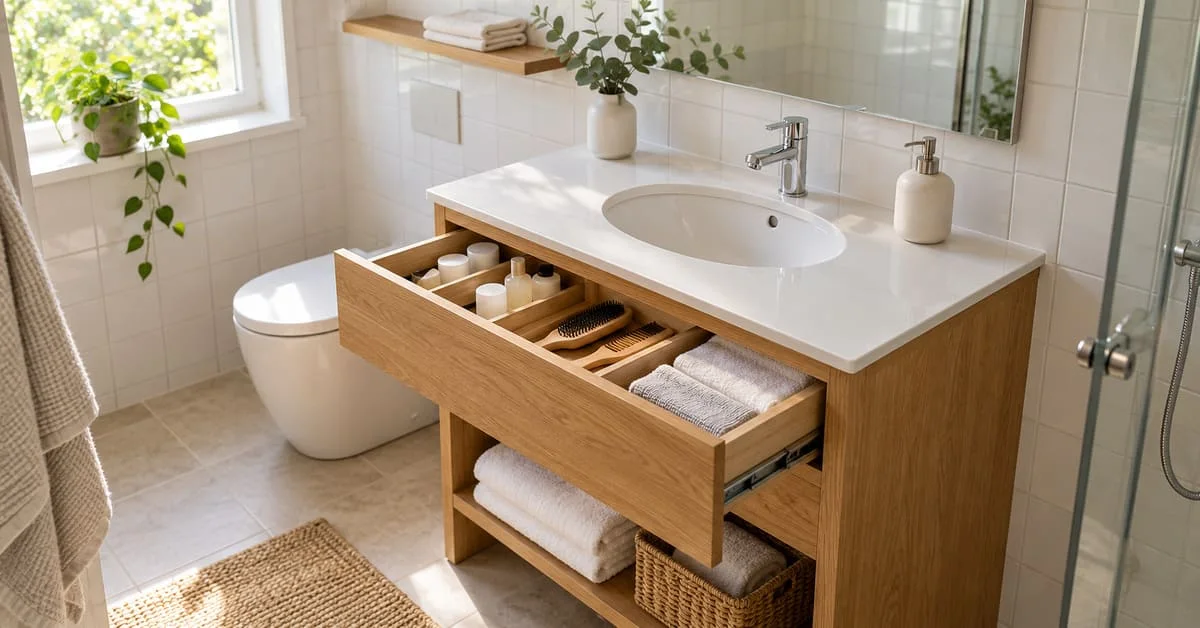
Choose bathroom storage by deciding what you need to reach, where you use it and how easily you can put it away. A cabinet can fit neatly into a corner yet leave you bending, stretching or moving bottles every morning. The right choice gives frequently used essentials an accessible home and leaves enough room to use the bathroom comfortably.
Start with your daily routine
Before shopping, set out the items you use every day. Separate them from unopened replacements, occasional treatments and spare towels. This shows how much accessible storage you actually need.
Plan around where each task happens. Toothpaste and skincare belong near the basin; a fresh towel should be easy to collect before bathing; spare toilet rolls need a convenient spot beside the toilet. Avoid making one distant cupboard serve the entire room.
In a shared bathroom, count everyone’s daily products. Two shallow baskets may organise separate routines better than one crowded shelf. Give each person a defined space, while keeping shared supplies together so nobody has to search through somebody else’s toiletries.
Notice which items repeatedly end up on the basin edge. If a product never returns to its cupboard, the current position or opening may be inconvenient. Use that observation to decide what the replacement must improve.
Measure the space needed to use the furniture
Record the available width, depth and height, including skirting boards, exposed pipes and nearby radiators. Then consider what happens when the furniture opens. A drawer needs room to extend, a cupboard door needs a clear swing, and a laundry lid needs clearance above it.
Mark the proposed footprint on the floor with paper or masking tape suitable for the surface. Walk between the basin, toilet and shower, and open the bathroom door fully. Leave room to stand in front of the storage and take things out.
Check internal measurements separately. External dimensions cannot tell you whether a tall pump bottle fits between shelves. For an around-sink cabinet, confirm the opening and internal clearances against your basin pedestal and pipework before ordering.
Allow hand space above bottles as well as room for the bottles themselves. If you intend to operate a pump while it stays on the shelf, check that movement too.
Match the storage layout to its contents
Small toiletries are easier to find when they sit in a shallow row or a divided drawer. Deep cupboards suit bulkier supplies, but small bottles can disappear behind larger containers. Removable trays help you bring a whole group forward without unpacking the shelf.
A mirrored wall cabinet can keep grooming essentials close to where you use them. The Ocean Wall Mirrored Cabinet Oak combines a cupboard with a mirrored door and measures 400mm wide, 550mm high and 170mm deep. Its shallow format makes it worth considering near the basin, subject to suitable mounting and enough clearance to lean forward comfortably.
For storage around an existing sink, the Alaska Vanity Unit Grey provides two shelves inside a cupboard. It measures 600mm wide, 600mm high and 290mm deep. Consider it for supplies you want concealed near the basin, after checking compatibility with your plumbing.
If floor width is limited, the Alaska Tall Unit White offers five shelves within dimensions of 400mm wide, 300mm deep and 1,890mm high. That layout offers scope to separate categories vertically. Reserve the shelves you can reach comfortably for daily items, and follow the supplied stability and fixing instructions.
Choose openings that everyone can manage
Test the reaching motion from the position in which you will use the furniture. Can you take out a bottle without lifting your shoulder awkwardly, reaching across the basin or crouching behind an open door?
Handle shape matters too. Consider whether everyone can grip the handle and operate the door comfortably, particularly with damp hands or limited hand movement. Check the opening direction before buying; a door that blocks access from the basin can make an otherwise suitable cabinet frustrating.
Use open storage selectively for things you need immediately. Enclosed compartments suit products you prefer out of sight. Choose the balance according to your routine and willingness to wipe exposed shelves.
Give laundry a separate home
A dedicated hamper keeps used clothing from occupying the places intended for clean towels and toiletries. Position it where getting changed naturally happens, with enough space to open it and remove the contents.
The Alaska Laundry Cabinet Grey has one hamper compartment, a hinged lid and a panelled design. It measures 510mm wide, 510mm high and 400mm deep. The Alaska Laundry Cabinet White offers the same dimensions and layout in white, so choose the colour that works with your existing fittings.
Keep a hinged lid clear of toiletries and decorative trays. Otherwise, putting laundry away becomes a task that requires moving everything on top first.
Check care and installation before ordering
Read the care guidance for the specific furniture you are considering. A bathroom listing alone should not be treated as confirmation that a cabinet can tolerate direct shower spray or standing water. Ask about placement if the intended position regularly gets wet.
Plan to wipe up spills promptly and use cleaning methods recommended for the finish. Keep access for cleaning around the unit, and follow any additional care instructions supplied with it.
Check assembly and fitting requirements as part of the purchase. Wall storage needs suitable support and fixings for the cabinet and its contents. Confirm shelf load limits where these affect what you plan to store.
FAQs
What is the best bathroom storage for daily toiletries?
A shallow cabinet, accessible drawer or small tray near the basin usually works well. Choose enough space to see and remove individual products without shifting everything around them.
How can I tell whether a shelf is too high?
Try reaching to the proposed shelf position with an empty container. If you need to stretch, rise onto your toes or cannot see what you are taking, choose a lower position for daily supplies.
How do I choose organisers for a bathroom cupboard?
Measure the usable shelf space and door opening first. Choose removable containers that fit through the opening comfortably, leaving enough height to lift products out. Avoid filling every gap with dividers.
Can I keep towels in enclosed bathroom storage?
Yes, provided they are dry before being put away. Check shelf depth against your folded towels and keep stacks small enough to remove one without pulling the others out.