

How to Arrange Bookshelves with Books, Art and Personal Objects
Arranging bookshelves successfully begins with organising books into a practical order before adding artwork and personal objects in balanced groups. Leave visible gaps, vary heights and repeat colours to create a display that feels organised without looking overcrowded. Keep frequently used books within easy reach, place heavier items on lower shelves and adapt the layout to the size of your bookcase. A thoughtful arrangement creates an attractive display that remains practical for everyday use.
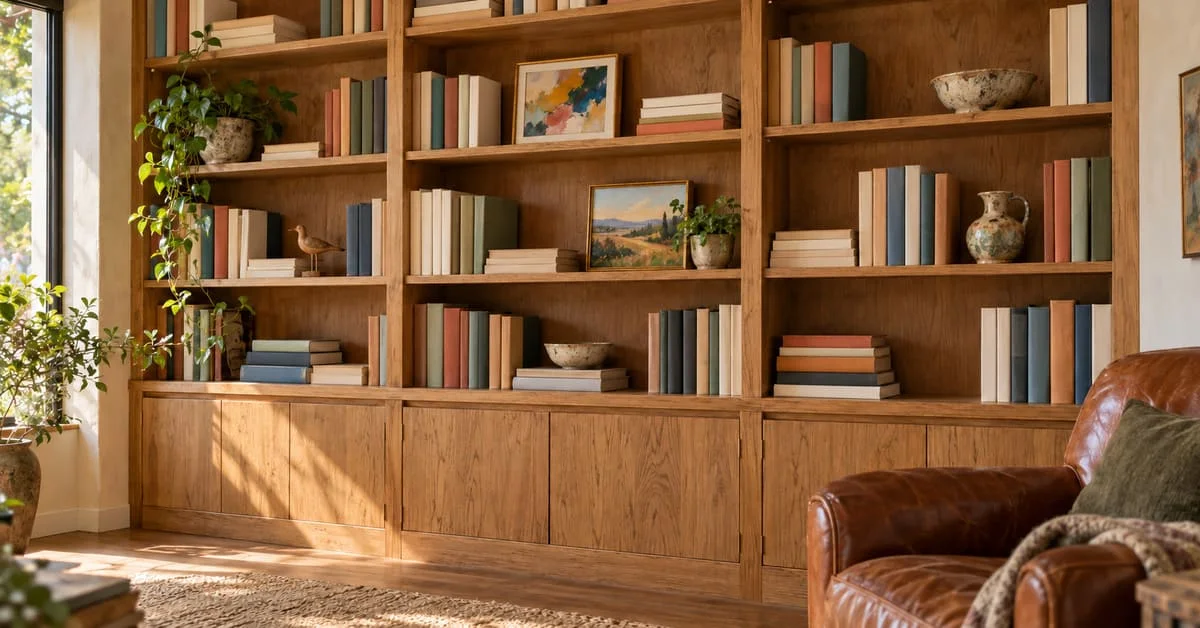
Arrange your books first, place a few pieces of art where they can be seen clearly, then add personal objects in small groups. Leave gaps between these groups and keep frequently read titles easy to reach. This gives the display structure while allowing the things you love to remain useful.
The aim is a bookcase that feels collected over time. A battered favourite, a family photograph and a handmade bowl can sit comfortably together when their scale and placement are considered.
Start with empty shelves and a realistic edit
Clear the bookcase, dust it and gather the books, framed pictures and objects you want to include. Separate everyday reading from occasional reference books, then choose the photographs and keepsakes you most want to see. Set the rest aside for rotation.
Measure the usable shelf depth and the height between shelves, including space needed for frame stands. Overall furniture dimensions do not tell you how much room an individual shelf provides.
Before loading, check shelf supports and the manufacturer's weight guidance. Secure freestanding furniture as instructed, using fixings suitable for your wall, and keep heavy items low. Position books and paper artwork away from direct sunlight, radiators and damp walls.
Give books a clear and practical order
Choose an organising system you will remember: fiction by author, reference books by subject, or separate sections for different household members. Keep current reading within comfortable reach.
Within those sections, group books of similar height where practical. Stand them upright with enough support to prevent leaning, but leave enough room to remove a volume without tugging at the top of its spine. Use proper bookends wherever a row ends beside an open space; a delicate ornament is a poor substitute.
Introduce a few short horizontal stacks to vary the arrangement. Lay oversized books flat when the shelf fully supports them, with larger volumes underneath smaller ones. Avoid tall piles that make the bottom book awkward to retrieve. Keep fragile bindings free of decorative objects, and place heavy ceramics directly on the shelf.
Position art where it can be appreciated
Choose one picture as the main point of interest, ideally on a shelf near your usual viewing height. A favourite print or framed postcard gives the arrangement a clear place to begin.
Set it towards the back, using a stable stand or suitable support. Leave visible space above the frame so it does not look wedged into the opening. For depth, place a smaller object slightly forward and to one side, keeping the important part of the image visible.
Avoid hiding pictures behind books you regularly move. If a frame only fits by blocking access, relocate it to another shelf or the adjacent wall. Display copies of irreplaceable family photographs and keep the originals safely stored away from light.
Bring personal objects together through meaning
A shelf becomes more personal when its contents have a connection. Put a small travel sketch beside books about the place, or display an inherited jug near a family photograph. These relationships give unrelated shapes a reason to sit together.
Try a group with different heights: a framed image, a medium ceramic piece and a small keepsake. Move them close enough to read as one arrangement, with a little separation so their outlines remain clear. Three pieces can be a useful starting point, but a single distinctive object may need nothing beside it.
Gather tiny souvenirs on a shallow tray so they do not disappear between larger items. Check that its base fits securely within the shelf.
Balance colour and leave deliberate gaps
Look at the whole bookcase from across the room. A run of dark spines or a large, strongly coloured vase can draw attention to one side. Shift another substantial group towards the opposite side on a different shelf to even out the display.
Repeat a colour already present in your books or artwork through a few objects. For example, blue in a print could connect with a small bowl lower down. Similar frame finishes can also bring mixed photographs together without making every accessory match.
Leave clear gaps between groups. There is no fixed percentage of empty space to achieve: a busy reading collection needs different treatment from a shelf holding a few treasured pieces. Remove an object if it makes its neighbours harder to see.
Adapt the arrangement to the bookcase
On narrow shelves, use one clear grouping per level. A compact frame beside a short run of books often works better than several layers competing for depth. Woodlands Furniture's Florida slim bookcase is listed at 65 cm wide and 26 cm deep overall, making it particularly important to check usable shelf space before selecting objects.
If paperwork keeps creeping into the display, give it separate storage. The Crown bookcase with two drawers combines three shelves with drawers, offering a place to put small everyday items out of sight.
When planning a new arrangement, compare the layouts within the handmade bookcase collection against what you actually need to store.
Test the display in everyday use
Take a photograph from your usual seat or the doorway. It often reveals an overcrowded corner or a picture that disappears into the background. Change one grouping at a time so you can see what improves the arrangement.
Then remove and replace a book. If doing so means dismantling a display, simplify that section. Check the shelves again after a week: the best arrangement should accommodate books being read, returned and added. Leave a little room for the next title rather than filling every available gap immediately.
Frequently asked questions
Should book spines face inwards or outwards?
Face spines outwards so titles are easy to identify. Turning books around may produce a uniform colour, but makes a working collection harder to navigate.
Can I put plants on a bookshelf?
Yes, if the plant suits the available light. Use a watertight outer pot and waterproof protection underneath, and remove it for watering. Keep foliage clear of paper.
How should I style a bookcase without a back?
Use freestanding frames and stable objects that look appealing from both sides if the unit divides a room. Avoid arrangements that depend on leaning against a back panel.
Can I add lighting to bookshelves?
Use lighting designed for furniture, following its clearance and fitting instructions. Keep cables clear of books and switches accessible. Switch display lighting off when it is unnecessary.
What should go on top of a tall bookcase?
Leave it empty or choose a lightweight, stable object well back from the edge. Avoid heavy pottery, precariously leaning frames and anything that requires frequent handling.